

Introduction
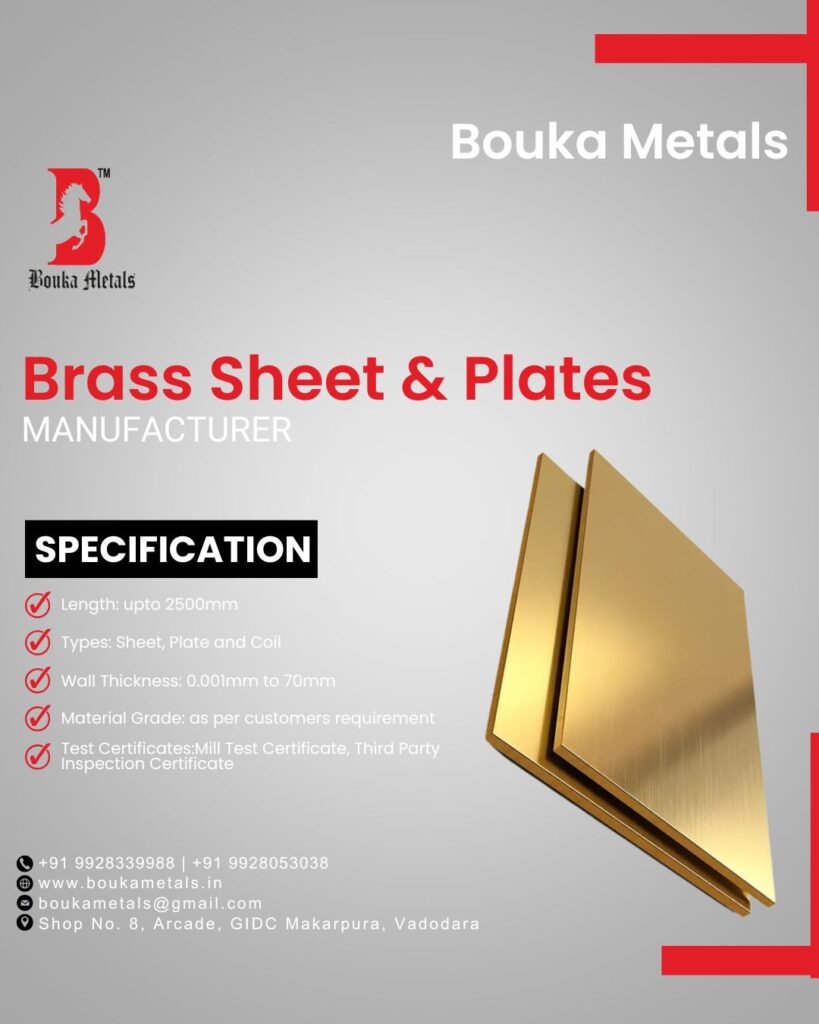
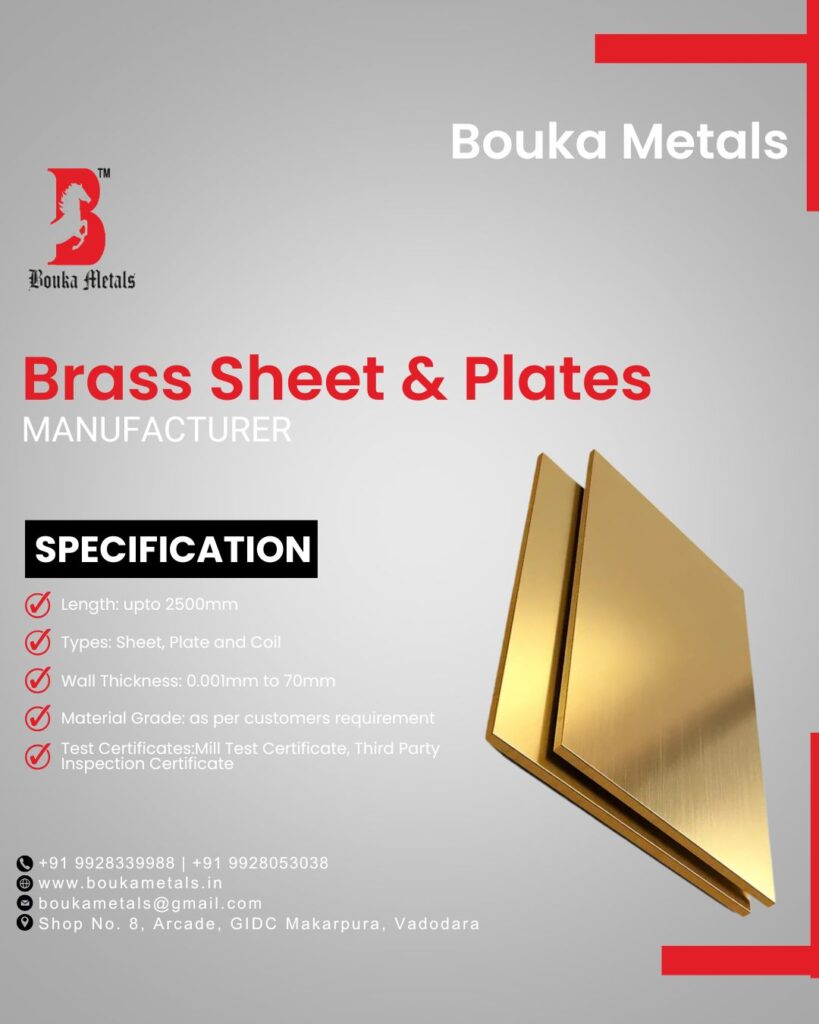
Brass has remained one of the most valuable engineering materials for centuries because of its perfect balance between strength, corrosion resistance, conductivity, and appearance. Brass Sheet Plates are manufactured with different copper-zinc compositions to meet industrial and commercial requirements.
Modern manufacturing techniques ensure consistent thickness, smooth surface finish, dimensional accuracy, and long service life. These products are widely selected where reliability, aesthetics, and machinability are equally important.
Because brass naturally resists corrosion and oxidation, it performs exceptionally well even in challenging environments. It also requires minimal maintenance, making it an economical solution for long-term applications.
Table of Contents
- Introduction
- What are Brass Sheet Plates?
- Key Features
- Technical Specifications
- Types of Brass Sheet Plates
- Benefits
- Applications
- Manufacturing Process
- Surface Finishes
- How to Select the Right Brass Plate
- Storage & Maintenance
- Why Choose Brass Sheet Plates?
- Frequently Asked Questions
- Conclusion
What are Brass Sheet Plates?
Brass Sheet Plates are flat boukametal products manufactured from brass alloy containing copper and zinc. Depending on the application, different alloy compositions are produced to achieve desired strength, hardness, ductility, and corrosion resistance.
These plates are supplied in multiple sizes and thicknesses for industrial fabrication, engineering components, decorative applications, electrical equipment, architectural installations, and precision manufacturing.
Key Features
Excellent Corrosion Resistance
The material naturally resists moisture, chemicals, and atmospheric corrosion, making it suitable for indoor and outdoor environments.
High Strength
Brass provides excellent structural strength while maintaining flexibility for fabrication.
Outstanding Machinability
Cutting, drilling, milling, punching, and CNC machining can be performed with excellent accuracy.
Attractive Appearance
Its natural golden finish makes it highly suitable for decorative applications.
Good Electrical Conductivity
Brass conducts electricity efficiently and is widely used in electrical components.
Superior Thermal Conductivity
The material transfers heat effectively, making it useful in heat-related applications.
Excellent Formability
It can be bent, stamped, rolled, and shaped without significant cracking.
Long Service Life
Properly maintained brass products offer years of reliable performance.
Technical Specifications
| Property | Details |
|---|---|
| Material | Brass (Copper-Zinc Alloy) |
| Thickness Range | 0.3 mm – 100 mm |
| Width | Custom Available |
| Length | Standard & Custom Sizes |
| Surface Finish | Mill, Polished, Matte, Mirror |
| Shape | Flat Sheet & Plate |
| Corrosion Resistance | Excellent |
| Machinability | Excellent |
| Weldability | Good |
| Durability | High |
| Strength | Medium to High |
Types of Brass Sheet Plates
Standard Brass Sheets
Used for general engineering and fabrication work.
Polished Brass Plates
Preferred for decorative and architectural applications.
Engraving Brass Sheets
Designed specifically for engraving and signage.
Industrial Brass Plates
Suitable for heavy-duty manufacturing and machinery.
Precision Brass Sheets
Manufactured with tight dimensional tolerances for engineering industries.
Benefits
Easy Fabrication
Brass can be cut, bent, punched, welded, and machined using standard equipment.
Excellent Durability
Its resistance to wear and corrosion helps reduce replacement costs.
Attractive Finish
The natural appearance enhances decorative products without additional coatings.
Low Maintenance
Regular cleaning is usually sufficient to maintain performance and appearance.
Cost Effective
Its long lifespan and minimal maintenance requirements reduce overall operating costs.
Reliable Performance
Brass performs consistently under various environmental and industrial conditions.
Applications
Brass Sheet Plates are used across numerous industries, including:
Construction Industry
- Decorative panels
- Wall cladding
- Door fittings
- Handrails
- Architectural elements
Electrical Industry
- Switchgear components
- Electrical terminals
- Connectors
- Bus bars
- Distribution equipment
Automotive Industry
- Radiator components
- Decorative trims
- Connectors
- Engine parts
Marine Industry
- Boat fittings
- Marine hardware
- Corrosion-resistant components
Furniture Industry
- Decorative furniture
- Cabinet hardware
- Interior accessories
Industrial Manufacturing
- Machine components
- Precision parts
- Fabrication projects
- Industrial equipment
Art & Craft
- Name plates
- Engraving
- Sculptures
- Decorative products
Manufacturing Process
Raw Material Selection
High-quality copper and zinc are selected according to alloy requirements.
Melting
The metals are melted under controlled temperatures.
Alloy Formation
The required composition is achieved for desired mechanical properties.
Rolling
The material is rolled into sheets of specific thickness.
Annealing
Heat treatment improves ductility and removes internal stresses.
Surface Finishing
Sheets receive polishing, cleaning, or special finishes based on customer requirements.
Quality Inspection
Each sheet undergoes dimensional, visual, and mechanical testing before delivery.
Surface Finishes
Mill Finish
Suitable for industrial fabrication.
Polished Finish
Provides an attractive reflective surface.
Matte Finish
Offers a smooth non-reflective appearance.
Mirror Finish
Ideal for luxury decorative applications.
How to Select the Right Brass Sheet Plate
Determine Application
Choose material according to industrial, decorative, or engineering use.
Select Thickness
Thickness should match the required strength and fabrication process.
Check Surface Finish
Select polished, matte, mirror, or mill finish depending on the project.
Verify Material Grade
Choose the correct alloy composition based on performance requirements.
Consider Dimensions
Order custom dimensions to reduce material wastage.
Storage & Maintenance
Proper handling significantly increases product life.
Storage Tips
- Store indoors in dry conditions.
- Keep away from excessive moisture.
- Use protective packaging during transportation.
- Avoid direct contact with corrosive chemicals.
Maintenance Tips
- Clean using a soft cloth.
- Remove dust regularly.
- Avoid abrasive cleaners.
- Inspect periodically for scratches or surface damage.
Why Choose Brass Sheet Plates?
Brass offers an excellent combination of durability, appearance, corrosion resistance, machinability, and versatility. It performs reliably in demanding industrial environments while also providing an attractive finish for architectural and decorative applications.
Its long service life, low maintenance requirements, and ease of fabrication make it one of the most dependable materials for manufacturers, engineers, fabricators, designers, and construction professionals.
Frequently Asked Questions
What are Brass Sheet Plates used for?
They are commonly used in construction, electrical equipment, automotive components, industrial fabrication, marine hardware, decorative products, and engineering applications.
Are Brass Sheet Plates corrosion resistant?
Yes. Brass naturally offers excellent resistance to corrosion, moisture, and oxidation.
Can Brass Sheet Plates be welded?
Yes. Depending on the alloy grade and application, brass can be welded using suitable welding techniques.
Are custom sizes available?
Yes. Manufacturers generally provide custom thicknesses, widths, and lengths according to project requirements.
Can Brass Sheet Plates be polished?
Yes. Brass accepts polishing exceptionally well and can achieve a bright mirror-like finish.
Is brass suitable for outdoor applications?
Yes. With proper maintenance, brass performs well in outdoor environments due to its corrosion resistance.
Can brass be machined easily?
Yes. Brass is one of the easiest engineering metals to machine, drill, cut, mill, and engrave.
Does brass require frequent maintenance?
No. Routine cleaning and proper storage are usually sufficient to maintain its appearance and performance.
Conclusion
Brass Sheet Plates continue to be one of the most trusted materials for industrial, commercial, and decorative applications. Their excellent corrosion resistance, durability, workability, attractive finish, and long service life make them suitable for a wide variety of engineering and architectural projects.
Whether the requirement involves precision manufacturing, fabrication, electrical components, marine equipment, or decorative installations, brass delivers dependable performance with minimal maintenance. Choosing high-quality brass sheet plates ensures consistent quality, improved productivity, and long-term value across every application.
Check this :- https://steel.gov.in/
