

Table of Contents
- Introduction
- Understanding Weld Neck Flange Design
- Key Features and Construction
- Industrial Applications
- Benefits of Using This Flange Type
- Material Options and Specifications
- Selection Considerations
- Why Choose Bouka Metals
- Conclusion
- FAQs
Introduction
Weld Neck Flange products play a vital role in modern industrial piping networks where strength, safety, and operational reliability are essential. From oil refineries and chemical plants to power stations and water treatment facilities, industrial operators depend on high-quality flanged connections to maintain uninterrupted flow and system integrity.
As industrial processes become more demanding, piping components must withstand higher pressures, temperature fluctuations, vibration, and corrosive environments. Weld Neck Flange A properly engineered flange connection helps ensure long service life while minimizing maintenance requirements and operational risks.
Among the various flange configurations available today, the weld-neck design continues to be one of the most trusted choices for critical applications. Weld Neck Flange. Its unique tapered hub construction provides exceptional stress distribution, making it particularly suitable for high-pressure systems where structural performance cannot be compromised.
Understanding Weld Neck Flange Design
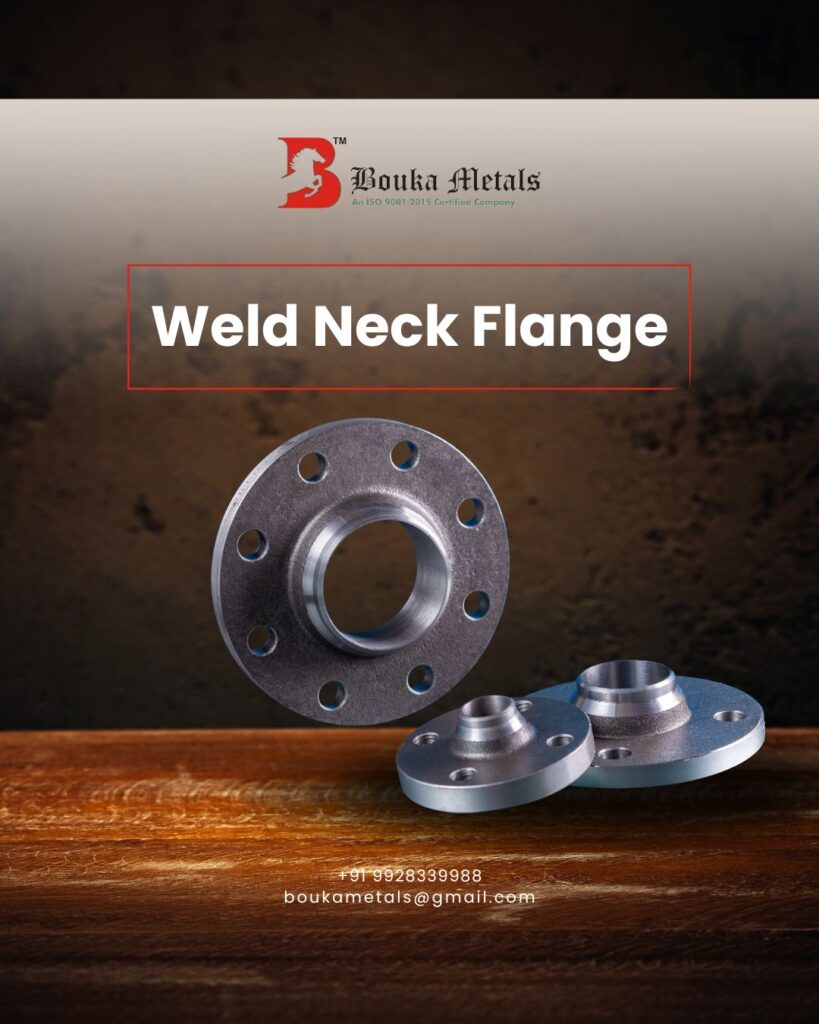
A Weld Neck Flange is designed with a long tapered hub that is welded directly to a pipe using a butt-weld connection. This design allows stress to transition gradually from the flange into the pipe wall, reducing the concentration of forces that can lead to premature failure.
Unlike some alternative flange styles that may be easier to install initially, a welded neck design provides superior mechanical strength and long-term durability. Weld Neck Flange. Because the connection becomes an integral part of the piping system, it is capable of handling severe operating conditions more effectively.
The smooth transition between the flange hub and the pipe also improves flow characteristics within the system. Weld Neck Flange Reduced turbulence contributes to greater efficiency and can help minimize wear in applications involving continuous fluid movement.
Table 1: Basic Characteristics
| Feature | Description |
|---|---|
| Connection Method | Butt Weld |
| Pressure Capability | High |
| Temperature Resistance | Excellent |
| Structural Strength | Superior |
| Leak Prevention | High |
| Common Standards | ASME, ANSI, DIN, EN |
| Typical Industries | Oil & Gas, Chemical, Power |
Key Features and Construction
Weld Neck Flange The engineering behind this industrial flange makes it one of the most reliable options available for demanding applications.
A major advantage is the tapered hub section, Weld Neck Flange which evenly distributes stress throughout the assembly. This significantly reduces the likelihood of fatigue-related failures caused by pressure cycles or thermal expansion.
Another important feature is the full-penetration welding method. Because the flange is permanently welded to the pipe, the resulting joint offers excellent structural integrity and long-term stability.
Precision manufacturing also ensures accurate alignment between piping components. Proper alignment reduces flow disruption and contributes to efficient operation throughout the service life of the system.
Many industries choose this flange style because it performs exceptionally well under fluctuating operating conditions. Weld Neck Flange. Whether exposed to elevated temperatures, vibration, or varying pressure loads, the design remains highly dependable.
Industrial Applications
The versatility of this flange configuration makes it suitable for a broad range of industrial sectors.
Oil and Gas Processing
Pipelines and processing facilities often operate under extreme pressure and temperature conditions. Strong flanged connections are essential for maintaining safety and reliability throughout production and transportation operations.
Petrochemical Facilities
Chemical plants require piping systems capable of handling aggressive substances and corrosive media. Weld Neck Flange High-quality industrial flanges manufactured from suitable materials provide dependable performance in these demanding environments.
Power Generation
Steam lines, cooling circuits, and process piping systems in power plants frequently utilize welded flange connections because of their ability to withstand significant thermal and mechanical stress.
Water Treatment Systems
Water treatment facilities depend on durable piping infrastructure that can operate continuously with minimal downtime. Properly selected flange components contribute to long-term operational efficiency.
Marine and Offshore Installations
Offshore platforms and marine vessels face challenging environmental conditions, including saltwater exposure and constant vibration. Robust flange assemblies help maintain system integrity under these circumstances.
Pharmaceutical Manufacturing
Precision and cleanliness are critical within pharmaceutical production facilities. High-quality piping components support hygienic operations while ensuring consistent process performance.
10 Powerful Benefits of Using This Flange Type
1. Exceptional Structural Strength
The tapered hub design improves load distribution and reduces localized stress.
2. Superior Pressure Handling
These flanges are ideal for systems operating under elevated pressure conditions.
3. Improved Leak Resistance
A properly executed butt-weld connection provides excellent sealing performance.
4. Enhanced Fatigue Performance
The design resists damage caused by repeated pressure cycles and vibration.
5. Better Flow Efficiency
Accurate alignment helps reduce turbulence and pressure loss.
6. Longer Service Life
Durable construction contributes to extended operational performance.
7. Reduced Maintenance Requirements
Reliable connections minimize repair and replacement costs.
8. High Temperature Capability
The design performs effectively in elevated temperature environments.
9. Broad Material Availability
Multiple alloy options allow compatibility with diverse operating conditions.
10. Compliance with Global Standards
Manufactured according to recognized standards, these components support international project requirements.
Material Options and Specifications
Selecting the correct material is one of the most important factors influencing flange performance and longevity.
Table 2: Common Material Grades
| Material | Key Benefit |
| Carbon Steel | High Strength and Cost Efficiency |
| Stainless Steel 304 | General Corrosion Resistance |
| Stainless Steel 316 | Enhanced Chemical Resistance |
| Duplex Steel | High Strength with Corrosion Protection |
| Super Duplex Steel | Extreme Environment Capability |
| Alloy Steel | High Temperature Performance |
| Nickel Alloy | Exceptional Corrosion Resistance |
Material selection should always consider operating temperature, pressure, fluid composition, and environmental exposure.
Table 3: Common Standards
| Standard | Application Area |
| ASME B16.5 | Industrial Piping |
| ASME B16.47 | Large Diameter Systems |
| ANSI | Pressure Components |
| DIN | European Engineering Projects |
| EN | International Applications |
| BS | General Industrial Use |
For engineering specifications and pressure-class guidelines, industry professionals can refer to the American Society of Mechanical Engineers (ASME) at https://www.asme.org.
Selection Considerations
Choosing the right flange involves evaluating several technical factors. Engineers must assess pressure ratings, operating temperatures, material compatibility, pipe dimensions, and applicable industry standards.
Environmental conditions should also be considered. Systems exposed to corrosive chemicals, seawater, or high-temperature media may require specialized alloy materials to ensure long-term reliability.
Proper installation practices are equally important. Even the highest-quality flange component must be installed correctly to achieve optimal performance and service life.
Table 4: Selection Factors
| Factor | Importance |
| Pressure Rating | Safety and Performance |
| Temperature | Material Suitability |
| Fluid Type | Corrosion Resistance |
| Pipe Size | Compatibility |
| Industry Standards | Compliance |
| Environment | Long-Term Durability |
Why Choose Bouka Metals
Bouka Metals is recognized for supplying premium-quality piping products to industries across India. The company focuses on delivering reliable components manufactured to meet stringent industry requirements and international standards.
Customers benefit from extensive product availability, quality assurance procedures, competitive pricing, and dependable delivery schedules. Whether the requirement involves carbon steel, stainless steel, duplex steel, or specialized alloys, Bouka Metals provides solutions tailored to demanding industrial applications.
The company’s commitment to quality and customer satisfaction has helped establish long-term relationships across multiple industries. Technical expertise and product knowledge further support customers in selecting suitable components for their specific projects.
For additional flange products and industrial piping solutions, visitors can explore related categories available on the Bouka Metals website.
FAQs
What is a weld-neck flange used for?
It is primarily used in high-pressure and high-temperature piping systems where strength and reliability are essential.
Why is this flange design preferred for critical applications?
The tapered hub distributes stress evenly, reducing fatigue and improving durability.
Which industries commonly use these flanges?
Oil and gas, petrochemical, power generation, marine, water treatment, and pharmaceutical industries are major users.
What materials are available?
Common options include carbon steel, stainless steel, duplex steel, super duplex steel, alloy steel, and nickel alloys.
How do I choose the correct flange?
Consider pressure rating, operating temperature, fluid characteristics, material compatibility, and applicable standards.
Are these flanges suitable for corrosive environments?
Yes. Stainless steel, duplex steel, and nickel alloy grades provide excellent corrosion resistance for challenging applications.
Conclusion
Weld Neck Flange solutions continue to be a preferred choice for critical piping systems throughout the world. Their tapered hub construction, strong welded connection, and ability to withstand demanding operating conditions make them highly suitable for applications where reliability is essential.
From energy production and petrochemical processing to water treatment and marine engineering, these flanges deliver dependable performance while helping reduce maintenance costs and operational risks. When combined with proper material selection and installation practices, they contribute significantly to long-term system efficiency.
Bouka Metals supplies high-quality industrial flange products designed to meet modern engineering requirements and international standards, helping customers achieve reliable and cost-effective piping solutions.
