

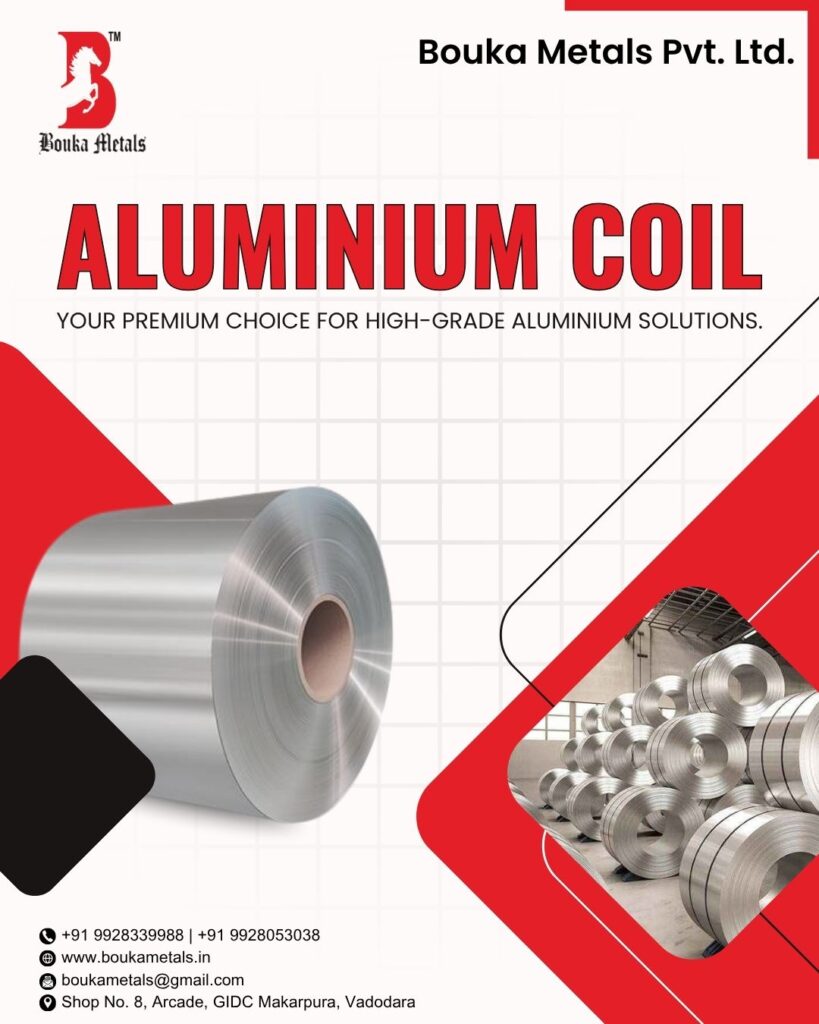
Aluminium Coil: Complete Guide to Types, Grades, Uses and Benefits
Introduction
Aluminium is one of the most widely used industrial metals because it combines strength, light weight, corrosion resistance, and excellent workability. When processed into coil form, it becomes even more practical for manufacturing, fabrication, transport, and large-scale industrial use. From roofing sheets and insulation panels to HVAC systems, electrical applications, and packaging, this material plays a critical role across modern industries.
At Bouka Metals, we manufacture and supply premium-quality aluminium coil products for a broad range of commercial and industrial requirements. Our products are available in multiple grades, widths, thicknesses, and finishes to meet application-specific needs in construction, automotive, electrical, marine, packaging, and general engineering sectors. Whether you require standard dimensions or customized specifications, our team focuses on consistent quality, reliable supply, and industry-compliant solutions.
This guide covers everything you need to know about aluminium coils, including their features, benefits, types, grades, applications, technical specifications, and key factors to consider before purchasing.
What is an Aluminium Coil?
An aluminium coil is a flat-rolled aluminium product that is wound into a continuous roll after the rolling process. It is produced in different alloys, tempers, widths, and thicknesses so that it can be used in a wide variety of industrial environments. Coil form makes the material easy to store, transport, cut, bend, stamp, and process into finished components.
Because aluminium naturally forms a protective oxide layer, it offers excellent resistance to corrosion and weathering. It is also lightweight compared to many other metals, which makes it a preferred option where weight reduction, ease of handling, and long-term durability are important. These properties make it suitable for cladding, false ceilings, insulation, ducting, automotive parts, transformer components, packaging materials, and marine applications.
Key Features of Aluminium Coil
One of the biggest advantages of this rolled metal product is its combination of practical performance and fabrication flexibility. It offers high utility across both decorative and industrial uses.
Important features include:
- Lightweight with a strong strength-to-weight ratio
- Excellent corrosion and oxidation resistance
- Good thermal and electrical conductivity
- Smooth and attractive surface finish
- Easy to cut, bend, roll, fabricate, and form
- Suitable for indoor and outdoor applications
- Available in different alloys and tempers
- Recyclable and environmentally responsible
- Long service life with low maintenance needs
- Good resistance to weather exposure in demanding environments
Benefits of Aluminium Coil
Industries choose aluminium-based coil products because they deliver long-term value while remaining easy to process. Their performance in harsh environments, combined with cost-effectiveness and design flexibility, makes them suitable for both structural and non-structural uses.
Some of the main benefits include easy handling during transportation and installation, strong resistance to rust and moisture, good thermal efficiency for insulation and HVAC applications, and a clean appearance for architectural projects. In addition, aluminium is a recyclable material that can be reused without major quality loss, making it a practical choice for businesses focused on sustainability and long-term operational efficiency.
Types of Aluminium Coil
Different applications require different finishes, coatings, and surface treatments. As a result, these products are available in several types depending on performance requirements and end use.
Mill Finish Coil
This is the natural finish obtained directly from the rolling mill. It is commonly used in general fabrication, insulation, industrial equipment, and applications where additional coating is not required.
Color Coated Coil
This type is coated with protective and decorative paint layers, making it suitable for roofing, cladding, façade systems, false ceilings, and architectural applications where appearance and weather resistance are important.
Anodized Coil
Anodizing improves corrosion resistance and enhances surface durability while also providing an attractive finish. It is commonly selected for architectural, decorative, and premium industrial applications.
Stucco Embossed Coil
This material has a textured surface pattern that improves appearance and helps in insulation and cladding applications. It is often used in refrigeration, ducting, and thermal insulation systems.
Mirror Finish Coil
Mirror-finished material offers a reflective surface and is typically used in decorative panels, interior applications, display units, and design-focused installations.
Painted Coil
Painted variants are widely used where aesthetics, branding, and surface protection are equally important. These are common in building exteriors, appliances, and fabricated components.
Roofing and Insulation Coil
These are specially processed products used in roofing sheets, thermal insulation systems, jacketing, and industrial cladding, where durability and weather protection are essential.
Aluminium Coil Grades
Different grades are selected depending on mechanical properties, corrosion resistance, weldability, and the final application. Choosing the correct alloy is important for performance, fabrication ease, and service life.
| Grade | Common Application |
|---|---|
| 1050 | Electrical conductors and general sheet applications |
| 1060 | Chemical equipment and high-purity industrial use |
| 1100 | General fabrication and decorative components |
| 3003 | Roofing, cladding, storage tanks, and insulation |
| 3105 | Building panels, architectural sheets, and sign boards |
| 5052 | Marine applications, transport bodies, and industrial fabrication |
| 5083 | Heavy engineering, pressure applications, and marine structures |
| 6061 | Structural components and engineering applications |
| 8011 | Packaging, caps, closures, and household foil products |
Applications of Aluminium Coil
This material is used in a wide range of industries because it combines strength, corrosion resistance, low weight, and processing flexibility. It can be fabricated into panels, strips, sheets, ducts, enclosures, and other finished components depending on the requirement.
Construction Industry
In the building and infrastructure sector, coil products are commonly used for roofing sheets, cladding systems, false ceilings, façade panels, insulation jacketing, partitions, rainwater systems, and decorative architectural elements. Their corrosion resistance and visual appeal make them suitable for long-term outdoor use.
HVAC and Insulation
In heating, ventilation, air-conditioning, and insulation systems, aluminium-based coils are used for ducting, thermal insulation jacketing, air-conditioning parts, and heat transfer components. Their thermal conductivity and lightweight nature support efficient system performance.
Electrical Industry
Because aluminium conducts electricity efficiently while remaining lighter than many alternative metals, it is used in conductors, transformer winding components, busbars, and electrical enclosures.
Automotive and Transport
Vehicle manufacturers and fabricators use aluminium products in body panels, trims, heat shields, transport containers, and lightweight structural parts where lower weight contributes to fuel efficiency and easier handling.
Packaging Industry
In packaging, these rolled products are used for food containers, closures, caps, pharmaceutical packaging, and industrial wrapping applications because of their formability, hygiene, and protective properties.
Marine and Industrial Use
Marine-grade alloys are used for boat components, ship fittings, and structures exposed to moisture-rich environments. In industrial manufacturing, they are also used for machine covers, fabrication work, insulation systems, storage applications, and engineered parts.
Technical Specifications
At Bouka Metals, our aluminium coil range is available in a variety of sizes and technical configurations depending on project requirements.
| Specification | Details |
| Material | Aluminium Alloy |
| Thickness | 0.20 mm – 6 mm |
| Width | 20 mm – 2000 mm |
| Coil Weight | As per requirement |
| Temper | O, H12, H14, H16, H18, H24 |
| Surface Finish | Mill Finish, Coated, Embossed, Anodized |
| Standards | ASTM, EN, JIS, IS |
| Grades | 1050, 1060, 1100, 3003, 3105, 5052, 5083, 6061, 8011 |
Advantages of Aluminium Coil
There are several reasons why industries continue to prefer aluminium-based rolled products over many conventional materials. Their strength-to-weight ratio makes them easier to transport and install, while their resistance to corrosion reduces maintenance and replacement costs over time. They are also easy to fabricate into complex shapes, which helps manufacturers maintain design flexibility.
Another major advantage is long-term value. Since aluminium is durable, weather-resistant, and recyclable, it supports both operational efficiency and sustainability goals. For businesses that need a material that performs well across construction, engineering, packaging, and industrial processing, aluminium coils remain a reliable choice.
How to Choose the Right Aluminium Coil
Selecting the correct product depends on the intended application, operating environment, fabrication process, and performance expectations. Buyers should begin by identifying the required alloy grade based on strength, corrosion resistance, conductivity, or formability needs. The next step is to choose the appropriate thickness and width according to the design and manufacturing process.
Surface finish is another important factor. Mill finish may be sufficient for industrial use, while coated, anodized, or embossed finishes may be more suitable for decorative, architectural, or weather-exposed applications. It is also essential to verify compliance with relevant standards such as ASTM, EN, JIS, or IS, especially for industrial and export-oriented projects. Working with a reliable supplier like Bouka Metals helps ensure consistent quality, proper documentation, and application-specific guidance.
Maintenance Tips
Although aluminium is known for low maintenance, proper storage and handling can significantly improve its lifespan and surface quality. Coils should be stored in a clean, dry environment to prevent moisture-related surface issues. During transport, they should be protected from water exposure and rough handling that may cause dents, edge damage, or scratches.
Cleaning should be done using non-abrasive materials and mild solutions where required. Contact with highly corrosive chemicals should be avoided unless the selected grade is specifically designed for that environment. Regular inspection also helps identify any handling damage before the material enters fabrication or installation.
Why Choose Bouka Metals?
Bouka Metals is committed to delivering high-quality aluminium products backed by technical reliability, consistent manufacturing standards, and customer-focused service. We understand that different industries require different grades, finishes, dimensions, and supply schedules, which is why we offer tailored solutions to match project needs.
Our strengths include premium-grade raw materials, strict quality inspection, multiple alloy options, custom sizes, competitive pricing, and dependable delivery across India. We work closely with clients from construction, fabrication, packaging, engineering, and industrial sectors to ensure they receive the right material for the right application. With a strong focus on quality and service, Bouka Metals has become a trusted source for aluminium solutions.
Frequently Asked Questions (FAQs)
What is an aluminium coil?
It is a flat-rolled aluminium product supplied in continuous roll form for easy transport, storage, and industrial processing.
What industries use aluminium coils?
They are widely used in construction, HVAC, electrical, automotive, marine, packaging, pharmaceutical, and general manufacturing sectors.
Which grades are commonly available?
Commonly used grades include 1050, 1060, 1100, 3003, 3105, 5052, 5083, 6061, and 8011, depending on the application.
Are aluminium coils corrosion-resistant?
Yes. Aluminium naturally forms a protective oxide layer that helps resist corrosion, oxidation, and weather exposure.
Can these coils be customized?
Yes. They can be supplied in customized thicknesses, widths, grades, tempers, and finishes based on industrial requirements.
Conclusion
Aluminium coil is an essential material for modern industry because it offers a practical balance of durability, corrosion resistance, lightweight performance, conductivity, and fabrication flexibility. It is used in everything from roofing and cladding to electrical systems, packaging, insulation, and transport applications. For businesses that need a reliable, cost-effective, and long-lasting metal solution, aluminium in coil form remains one of the most efficient choices available.
Bouka Metals supplies premium-quality aluminium coils manufactured to meet industry expectations for performance, finish, and dimensional accuracy. With a wide range of grades, customized specifications, and a strong focus on quality, we help businesses source dependable aluminium products for diverse industrial applications.
For reference on quality and standards in India, you can also review Bureau of Indian Standards (BIS) guidelines: https://www.bis.gov.in/
