

Table of Contents
- Introduction
- What Are Carbon Steel Fasteners?
- Key Features of Carbon Steel Fasteners
- Types of Carbon Steel Fasteners
- Advantages of Carbon Steel Fasteners
- Industrial Applications
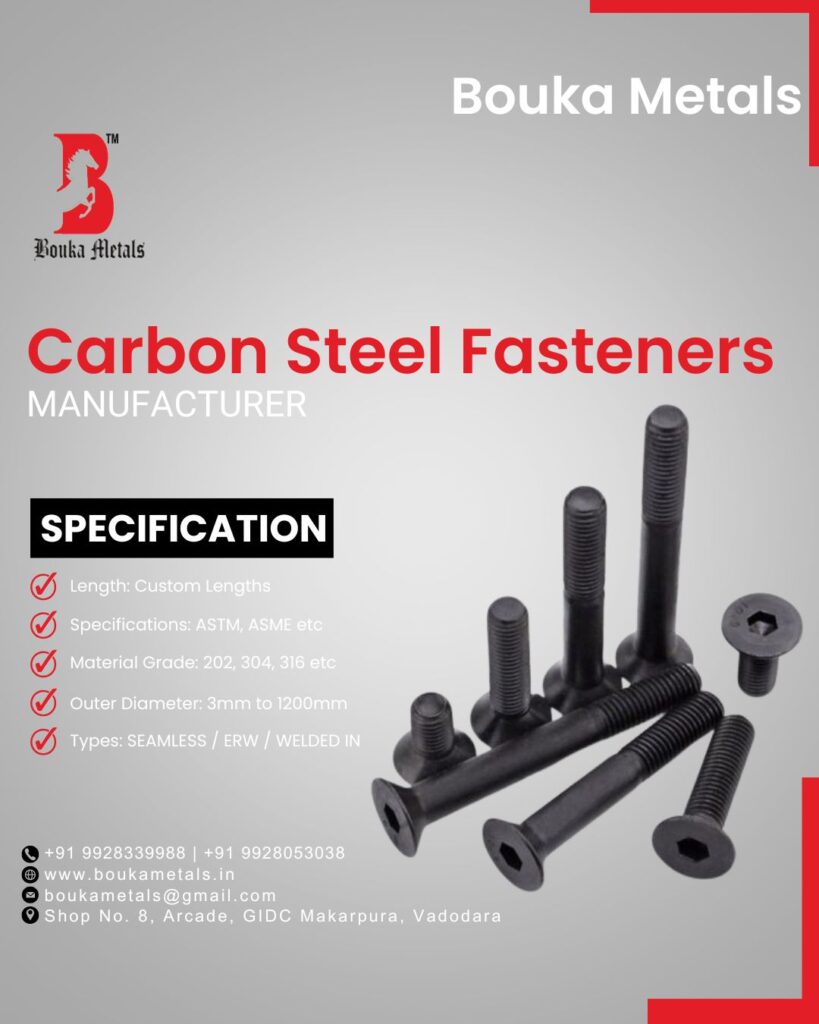
- Technical Specifications
- Manufacturing Process
- Why Choose Bouka Metals?
- Storage and Maintenance Tips
- Frequently Asked Questions
- Conclusion
Introduction
Fasteners are among the most essential components used in engineering and industrial manufacturing. From assembling machinery and constructing buildings to producing automobiles and industrial equipment, every project relies on fastening solutions that provide strength, stability, and long-term reliability. Selecting the right fastener not only improves structural integrity but also enhances operational safety, minimizes maintenance, and increases the overall lifespan of equipment.
Carbon steel has become one of the most preferred materials for manufacturing industrial fasteners because it combines excellent mechanical strength with cost-effectiveness. Its ability to withstand heavy loads, repeated stress, and demanding operating conditions makes it suitable for a wide range of industrial sectors. These fastening components are engineered to deliver consistent performance in applications where secure connections and dependable durability are essential.
Modern manufacturing processes ensure precise dimensions, accurate threading, and high-quality finishes that allow these products to meet international standards. They are available in various grades and protective coatings, enabling engineers to choose the most suitable option based on environmental conditions and performance requirements. Whether used in commercial infrastructure, transportation systems, energy projects, or heavy engineering, they continue to provide reliable fastening solutions for complex industrial assemblies.
As industries continue to demand stronger and more efficient mechanical connections, manufacturers focus on producing fastening products that combine durability, precision, and long service life. Bouka Metals follows strict quality control procedures and advanced manufacturing techniques to ensure every product meets the highest standards of performance and reliability.
What Are Carbon Steel Fasteners?
Carbon steel fasteners are mechanical components specifically designed to join two or more parts securely in industrial, commercial, and engineering applications. These products are manufactured from carbon steel, an alloy primarily composed of iron and carbon, offering an ideal balance of strength, toughness, and affordability. Depending on the carbon content, these fasteners can provide varying levels of hardness, tensile strength, and wear resistance, making them suitable for a wide range of applications.
They are produced in different forms such as bolts, nuts, screws, washers, threaded rods, studs, anchors, and rivets. Each type is designed to perform a specific function while ensuring secure and stable mechanical connections. Their versatility allows them to be used across industries ranging from construction and automotive manufacturing to heavy engineering, mining, agriculture, marine equipment, and power generation.
One of the key reasons for their widespread use is their ability to handle high mechanical loads without compromising structural integrity. They are available with several protective surface finishes, including zinc plating, hot-dip galvanizing, phosphate coating, and black oxide treatment, which help improve resistance to corrosion, wear, and environmental exposure.
These fasteners are manufactured according to internationally recognized standards, ensuring compatibility with different assemblies and equipment. Their precise dimensions, consistent threading, and dependable mechanical performance make them a preferred choice for engineers and industrial professionals seeking long-lasting fastening solutions.
Key Features of Carbon Steel Fasteners
High Mechanical Strength
Manufactured from quality carbon steel, these fasteners provide excellent tensile and shear strength, allowing them to withstand heavy loads and continuous mechanical stress in demanding industrial environments.
Outstanding Durability
Designed for long-term performance, they maintain structural integrity even under challenging operating conditions, making them suitable for applications requiring dependable and consistent fastening.
Cost-Effective Performance
Compared with many specialty alloys, carbon steel offers excellent strength at an economical cost, making it an ideal choice for large-scale industrial and commercial projects.
Precision Engineering
Advanced manufacturing processes ensure accurate dimensions, precise threading, and consistent product quality for reliable installation and secure fastening.
Wide Range of Sizes
Available in numerous diameters, lengths, thread configurations, and head styles to meet different engineering and construction requirements.
Multiple Surface Finishes
Protective coatings enhance resistance to moisture, oxidation, and wear while extending service life in different operating environments.
Excellent Load-Bearing Capacity
These fastening solutions are engineered to support heavy structural assemblies, industrial machinery, and equipment operating under significant mechanical loads.
Easy Installation
Standardized dimensions and precise threads simplify assembly, maintenance, and replacement, reducing installation time and improving operational efficiency.
Types of Carbon Steel Fasteners
Selecting the right fastening component is essential for achieving a secure and durable connection. Different industrial applications require different types of fasteners based on load capacity, installation method, environmental conditions, and maintenance requirements. Carbon steel fasteners are available in a wide range of designs to meet these diverse needs.
Carbon Steel Bolts
Carbon steel bolts are among the most commonly used fastening components in industrial and structural applications. They are designed to join two or more components with the help of matching nuts and washers. Their high tensile strength makes them suitable for bridges, buildings, heavy machinery, steel structures, and engineering equipment where strong and reliable connections are required.
Carbon Steel Nuts
Nuts are internally threaded fasteners that work together with bolts to create secure mechanical joints. They are available in several designs, including hex nuts, lock nuts, coupling nuts, flange nuts, and heavy hex nuts. Precision threading ensures proper tightening while minimizing the chances of loosening under vibration.
Carbon Steel Screws
Carbon steel screws create strong fastening connections without always requiring a separate nut. They are widely used in machinery, metal fabrication, woodworking, construction, and equipment assembly. Different thread profiles and head styles allow them to suit a variety of installation requirements.
Carbon Steel Washers
Washers distribute clamping force evenly across the fastening surface. They help prevent damage to materials, reduce vibration, and improve load distribution while increasing the lifespan of the fastening assembly.
Carbon Steel Stud Bolts
Stud bolts feature threads on both ends or along the entire length of the rod. They are commonly used in pressure vessels, piping systems, refineries, petrochemical plants, and high-pressure industrial equipment where secure bolted joints are critical.
Carbon Steel Threaded Rods
Threaded rods provide continuous threaded fastening for suspended structures, pipe supports, anchoring systems, and heavy engineering installations. They offer excellent flexibility in industrial fabrication projects.
Carbon Steel Anchors
Anchors are designed to secure heavy equipment and structural elements to concrete or masonry surfaces. Their superior holding strength makes them suitable for infrastructure, construction, and industrial facilities.
Carbon Steel Rivets
Rivets create permanent mechanical joints by deforming one end during installation. They are widely used in sheet metal fabrication, transportation, aerospace support structures, and heavy manufacturing applications.
Advantages of Carbon Steel Fasteners
Carbon steel fasteners continue to be the preferred choice for industries because they combine excellent mechanical performance with affordability. Their ability to deliver dependable fastening solutions under demanding conditions makes them suitable for both light-duty and heavy-duty applications.
Excellent Strength
These fasteners provide impressive tensile and shear strength, allowing them to support heavy loads without compromising structural integrity.
Long Service Life
When manufactured according to international standards and maintained properly, they provide reliable performance for many years.
Economical Solution
Compared to alloy steel and stainless steel alternatives, carbon steel offers excellent mechanical properties at a lower cost, making it ideal for large industrial projects.
Versatile Applications
They can be used across numerous industries, including construction, automotive, manufacturing, mining, railways, agriculture, marine engineering, and renewable energy.
Easy Availability
Carbon steel fasteners are produced in standardized sizes and specifications, making procurement, replacement, and maintenance much easier.
Reliable Performance
Precision manufacturing ensures accurate threads, consistent dimensions, and dependable fastening performance throughout their service life.
High Load Capacity
Designed for demanding industrial applications, they effectively withstand static loads, dynamic forces, and repeated mechanical stress.
Wide Range of Protective Coatings
Surface finishes such as zinc plating, hot-dip galvanizing, phosphate coating, and black oxide treatment improve durability and enhance corrosion resistance.
Industrial Applications
Because of their strength, durability, and adaptability, carbon steel fasteners are used across almost every major industry. Their ability to create secure mechanical joints makes them essential for both permanent installations and equipment requiring regular maintenance.
Construction Industry
Used in structural steel fabrication, bridges, commercial buildings, residential projects, warehouses, and industrial infrastructure.
Automotive Industry
Widely used in engine assemblies, chassis systems, suspension components, braking systems, transmission units, and vehicle body structures.
Oil and Gas Industry
Suitable for pipelines, drilling equipment, storage tanks, offshore platforms, refineries, and pressure equipment where strong fastening performance is required.
Power Generation
Used in thermal plants, hydroelectric facilities, renewable energy projects, wind turbines, electrical substations, and power transmission equipment.
Heavy Engineering
Industrial machinery, manufacturing plants, mining equipment, processing units, cranes, conveyors, and fabrication systems depend on durable fastening solutions.
Railway Industry
Applied in railway tracks, locomotives, signaling equipment, bridges, maintenance systems, and transportation infrastructure.
Agriculture Equipment
Used in tractors, harvesters, irrigation systems, farm machinery, storage equipment, and agricultural processing units.
Marine Industry
Suitable for shipbuilding, port equipment, cargo handling systems, and offshore engineering projects where reliable fastening is essential.
Industrial Manufacturing
Production plants rely on these fastening components for machinery assembly, equipment installation, maintenance operations, and manufacturing systems.
Technical Specifications
| Specification | Details |
|---|---|
| Material | Carbon Steel |
| Available Grades | Low Carbon, Medium Carbon, High Carbon |
| Product Types | Bolts, Nuts, Screws, Washers, Studs, Rivets, Threaded Rods |
| Standard | ASTM, DIN, ISO, ANSI, BS, JIS |
| Thread Type | Metric & Imperial |
| Surface Finish | Plain, Zinc Plated, Black Oxide, Hot Dip Galvanized, Phosphate |
| Diameter Range | M3 to M100 (Custom Sizes Available) |
| Length | As per Customer Requirement |
| Strength Grade | 4.6, 5.6, 8.8, 10.9, 12.9 |
| Packaging | Box, Carton, Wooden Crate, Export Packing |
| Custom Manufacturing | Available |
Manufacturing Process
Producing high-quality fastening products requires advanced manufacturing technology, strict quality control, and carefully selected raw materials. Every production stage contributes to the final strength, precision, and durability of the finished product.
Raw Material Selection
Certified carbon steel is carefully selected and inspected to ensure consistent chemical composition and mechanical properties before production begins.
Wire Rod Preparation
The raw material is cleaned, straightened, and prepared for the heading and forming process to achieve accurate dimensions.
Cold or Hot Forging
Depending on the product design, the material is shaped using advanced forging equipment to create the required head and body profile.
Thread Rolling
Threads are produced through precision rolling processes that improve thread accuracy, surface finish, and mechanical strength.
Heat Treatment
Controlled heat treatment enhances hardness, tensile strength, wear resistance, and overall durability while maintaining dimensional stability.
Surface Finishing
Protective coatings such as zinc plating, black oxide, phosphate coating, or hot-dip galvanizing are applied to improve corrosion resistance and appearance.
Quality Inspection
Every batch undergoes dimensional inspection, mechanical testing, thread verification, hardness testing, and visual examination to ensure compliance with international quality standards.
Packaging and Dispatch
Finished products are packed using moisture-resistant industrial packaging and prepared for safe transportation to domestic and international customers.
Why Choose Bouka Metals?
Choosing the right fastener manufacturer is just as important as selecting the right fastening product. The quality of fasteners directly affects the safety, durability, and long-term performance of any structure or mechanical assembly. Bouka Metals is committed to manufacturing premium-quality fastening solutions that meet the evolving requirements of industries worldwide. Every product is produced using high-grade raw materials, advanced manufacturing technology, and strict quality control procedures to ensure dependable performance.
Our experienced engineering team follows internationally recognized manufacturing standards, ensuring every fastener offers precise dimensions, excellent mechanical strength, and consistent quality. Whether the requirement is for standard industrial products or customized fastening solutions, we focus on delivering products that meet customer expectations in terms of performance, reliability, and value.
Premium Quality Raw Materials
Every product is manufactured using carefully selected raw materials that comply with recognized industrial standards, ensuring excellent durability and mechanical performance.
Advanced Manufacturing Technology
Modern forging, thread rolling, machining, and heat treatment processes help produce fasteners with superior strength, dimensional accuracy, and consistent quality.
Strict Quality Control
Each product undergoes comprehensive quality inspections, including dimensional verification, hardness testing, tensile strength testing, thread inspection, and surface finish evaluation before dispatch.
Wide Product Range
A complete range of bolts, nuts, screws, washers, threaded rods, stud bolts, and other fastening solutions is available in various sizes, grades, and finishes.
Customized Manufacturing
Products can be manufactured according to customer drawings, technical specifications, dimensions, and industry requirements.
Competitive Pricing
Efficient manufacturing processes enable us to provide high-quality products at competitive market prices without compromising quality.
Timely Delivery
An efficient production system and well-managed logistics network ensure on-time delivery for domestic as well as international customers.
Customer Support
Our technical team provides complete assistance in product selection, technical specifications, customization, and after-sales support.
Storage and Maintenance Tips
Proper storage and maintenance help preserve the quality, strength, and service life of industrial fasteners. Following recommended handling practices reduces the risk of corrosion, contamination, and installation-related issues.
Store in a Dry Environment
Fasteners should always be stored in clean, dry, and well-ventilated areas to prevent moisture-related corrosion.
Keep Products Properly Organized
Different sizes, grades, and finishes should be stored separately to avoid confusion during installation and inventory management.
Protect Surface Coatings
Avoid rough handling that may damage protective coatings such as zinc plating or galvanizing, as damaged coatings may reduce corrosion resistance.
Inspect Before Installation
Check for damaged threads, rust, surface defects, or contamination before using any fastening component.
Use Correct Installation Tools
Using appropriate torque tools and installation equipment helps prevent thread damage and ensures proper tightening.
Perform Periodic Maintenance
Fasteners used in high-load or vibration-prone applications should be inspected regularly to ensure they remain properly tightened and free from wear or corrosion.
Replace Damaged Components
Any fastener showing excessive corrosion, thread damage, deformation, or mechanical wear should be replaced immediately to maintain structural safety.
Frequently Asked Questions (FAQs)
What are carbon steel fasteners used for?
Carbon steel fasteners are used to securely join mechanical and structural components in construction, automotive, manufacturing, heavy engineering, infrastructure, energy, railway, and industrial applications.
What are the advantages of using carbon steel fasteners?
They offer high strength, durability, cost-effectiveness, easy availability, reliable performance, and compatibility with various industrial applications.
Are carbon steel fasteners suitable for outdoor applications?
Yes. When protected with suitable surface coatings such as hot-dip galvanizing or zinc plating, they can perform effectively in outdoor environments.
Which industries commonly use carbon steel fasteners?
Construction, automotive, mining, marine, railway, oil and gas, power generation, agriculture, heavy engineering, and industrial manufacturing are among the major industries that use these products.
What surface finishes are available?
Common finishes include plain, zinc plated, black oxide, phosphate coated, hot-dip galvanized, and customized protective coatings depending on application requirements.
Can carbon steel fasteners be manufactured in custom sizes?
Yes. Manufacturers can produce customized dimensions, thread types, head styles, and finishes according to customer specifications and international standards.
How do I choose the correct fastener?
Selection depends on load requirements, environmental conditions, material compatibility, operating temperature, corrosion exposure, and applicable engineering standards.
How should fasteners be stored?
Store them in clean, dry conditions, away from moisture and corrosive chemicals. Proper packaging and organized storage help maintain product quality.
Are carbon steel fasteners reusable?
Some fastening components can be reused after careful inspection, provided they show no signs of deformation, corrosion, thread damage, or loss of mechanical strength.
Why choose Bouka Metals for fastening solutions?
Bouka Metals provides premium-quality products, advanced manufacturing, strict quality assurance, competitive pricing, customized solutions, and reliable customer support for diverse industrial requirements.
Conclusion
Industrial fastening solutions are essential for ensuring the safety, stability, and reliability of modern engineering structures and mechanical assemblies. Selecting high-quality fastening products contributes significantly to the overall performance, operational efficiency, and long-term durability of industrial projects. Carbon steel fasteners continue to be one of the most preferred choices because they combine excellent mechanical strength, versatility, affordability, and dependable performance across a wide range of applications.
From construction and infrastructure development to automotive manufacturing, power generation, heavy engineering, transportation, and industrial equipment, these fastening solutions provide secure mechanical connections capable of handling demanding working conditions. Their availability in different grades, dimensions, thread types, and protective finishes enables engineers to select products that meet specific project requirements while maintaining cost efficiency.
Check this :-https://steel.gov.in/
